Published April 13, 2026
The city of Austin we know and love now wasn’t always the city people lined up to move to. In fact, there was a time when many believed it wouldn’t make it at all.
Before the skyline, before the cranes, before the phrases “Austin boom” and “Keep Austin Weird” became part of everyday conversation, this city was a small, uncertain capital called Waterloo carved out along the Colorado River. And yet, piece by piece, landmark by landmark, Austin proved itself—through bold bets, architectural statements, and just enough eccentricity to set it apart from every other Texas city.
As Moreland celebrates 40 years of calling Austin home, we’re looking back at the stories that shaped it—the ones that didn’t just define the skyline, but redefined what it meant to invest here in the first place.
Because in Austin, real estate has always been more than property.
Investing in Austin real estate means you’re investing in the future of the city we call home.

From Waterloo to Austin
Before our iconic city was named Austin, it was first Waterloo—a tiny settlement of about a dozen residents near Shoal Creek.
But in 1839, when the Republic of Texas selected it as the capital, the name changed to honor Stephen F. Austin—and with it, the trajectory of the city itself.
It’s hard not to see the parallel. A small, overlooked place… rebranded, reimagined, and positioned for something much bigger.
A Capitol Built on Confidence
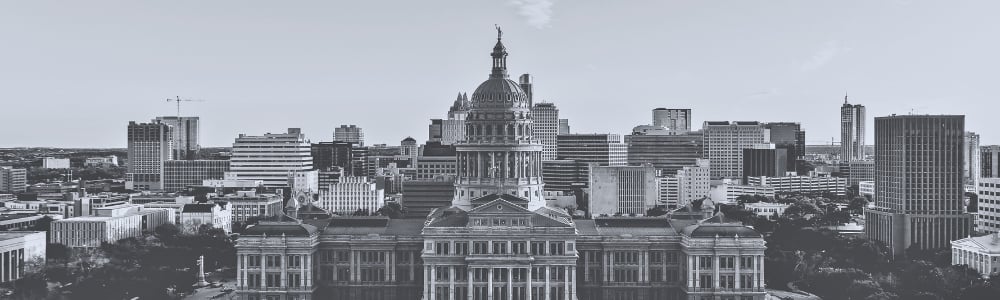
The Texas State Capitol didn’t just anchor the city geographically—it anchored its future.
What stands today is actually the fourth version of the Capitol, after earlier buildings were lost to fire and rapid growth. But its placement was intentional from the start: a visible, permanent commitment that Austin wasn’t temporary but instead became the center of Texas to stay.
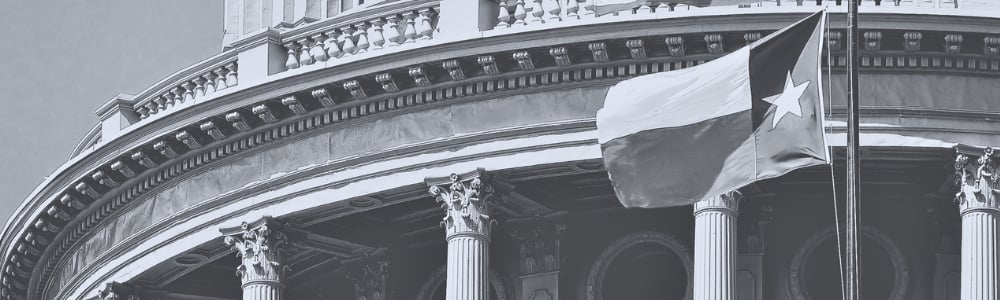
Taking a closer look, the Capitol tells an even deeper story. The building features the flags of the six nations that have governed Texas—Spain, France, Mexico, the Republic of Texas, the Confederate States, and the United States—layering Austin’s identity with a history that predates its time as the state capital.
Even now, Austin’s famous Capitol View Corridors protect sightlines to the building, shaping how—and where—the city can grow.
In a city defined by development, that kind of preservation says everything.
The Governor’s Mansion: A Different Kind of Power
Just a few blocks away, the Texas Governor's Mansion tells a quieter story.
Completed in 1856, it’s the oldest continuously occupied governor’s residence west of the Mississippi—a constant in a city that rarely stays the same for long.
While Austin has evolved around it, the home itself remains intentionally understated. No gates that separate it too far from the city, no overwhelming scale. Just a reminder that Austin’s roots—even at the highest levels—have always leaned a little more approachable.
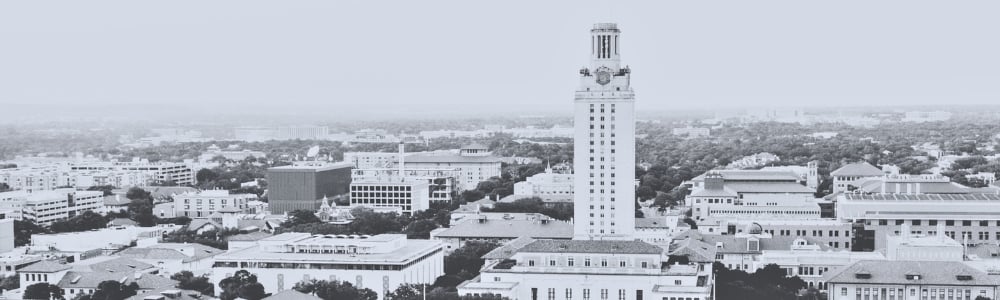
The University That Changed Everything
Established in 1883, UT Austin began with just one building, eight professors, and a little over 200 students. At the time, it was a quiet investment in education in a city that was still proving itself.
But that investment changed everything. The university quickly became an anchor—not just academically, but economically and culturally—drawing students, innovation, and long-term growth into the heart of the city. Entire neighborhoods, from Hyde Park to West Campus, grew alongside it, shaped by the rhythm of semesters, game days, and a steady influx of new ideas.
In many ways, UT didn’t just grow with Austin—it helped define what Austin would become. A place where creativity, education, and opportunity intersect… and where investing early tends to pay off.
The Driskill: Built When No One Was Sure
When the The Driskill opened in 1886, it was a bold move—maybe too bold.
At the time, Austin was still finding its footing. Many questioned whether a luxury hotel of that scale made sense for a city that wasn’t yet established. But cattle baron Jesse Driskill built it anyway, envisioning Austin as something bigger than it was.
And that’s the thing about Austin—some of its most defining places started as risks.
Today, The Driskill isn’t just the oldest operating hotel in the city—it’s a symbol of what happens when someone bets on Austin before everyone else does.

Lighting the City: Austin’s Moon Towers
Long before streetlights lined every road, Austin lit its nights in a way no other city still can.
The Moonlight Towers, installed in the 1890s, were designed to illuminate entire neighborhoods at once—casting a glow so bright you could read a watch from blocks away.
Today, Austin is home to the only remaining moon towers in the world. They’re functional, yes—but more than that, they’re a reflection of Austin’s early willingness to try something different. To solve problems creatively. To stand out.
—
From Waterloo to what we know today, every chapter of Austin’s history has been shaped by people willing to invest in its potential before it was proven.
And 40 years into Moreland’s story, that same mindset still drives everything we do.
Because the best opportunities in Austin have never been the obvious ones.
They’ve always been the ones you had to believe in first.
If you're thinking about what your next chapter in Austin could look like—whether you're buying, selling or simply looking to better understand the market—our agents are here to help you see what's possible, often before the rest of the market does.